Ready to bring the Silvur experience to your members? Book a personalized demo now!

Lesson 6
State-Level Considerations
2 min lesson
Last Updated: December 30, 2025
Are you planning to move to a different state in retirement? Well, not only will you need to update your driver's license, but you’ll also need to see if your move will impact your estate plan.
- Establishing a domicile: You need to determine the residency requirements for taxes, including income and property taxes for the state. Additionally, check to find out if there are taxes levied by your new city or county.
- Property titling: When you move to a new state, the titles associated with your property might not be recognized. Speak with an attorney to determine how you might need to title your property.
- Irrevocable trust: Some trusts pay taxes, and by moving to a new state, even as a trustee, the trust might be subject to those state taxes. Find out ahead of time how the taxes on the trust work in your new state.
- New home: As you get a new home in a new state, consider whether it should be added to a trust and what requirements there are to do so. You might also need to figure out how to title your home. If you have a partner you’re not married to, make sure your home is designated “joint tenancy with right of survivorship” if you want it to pass on to them without issues.
Communal Property
As a divorcee, you might not be worried about moving to a community property state. However, if you decide to get married while living in a state that recognizes communal property, that could change your estate planning approach.1

Additionally, even just cohabitating with someone else can change the equation, even if you never have a romantic relationship. Ensure you understand occupancy rules in various states and what could be considered a “common law marriage” or other arrangement. Whenever you dissolve a long-standing partnership (marriage or otherwise), you risk the need to make major changes to your estate plan.
Power of Attorney
Finally, understand that moving to a different state2 in retirement can affect your power of attorney. Below are the states that now accept the Uniform Power of Attorney Act, which can bring the power of attorney with you:
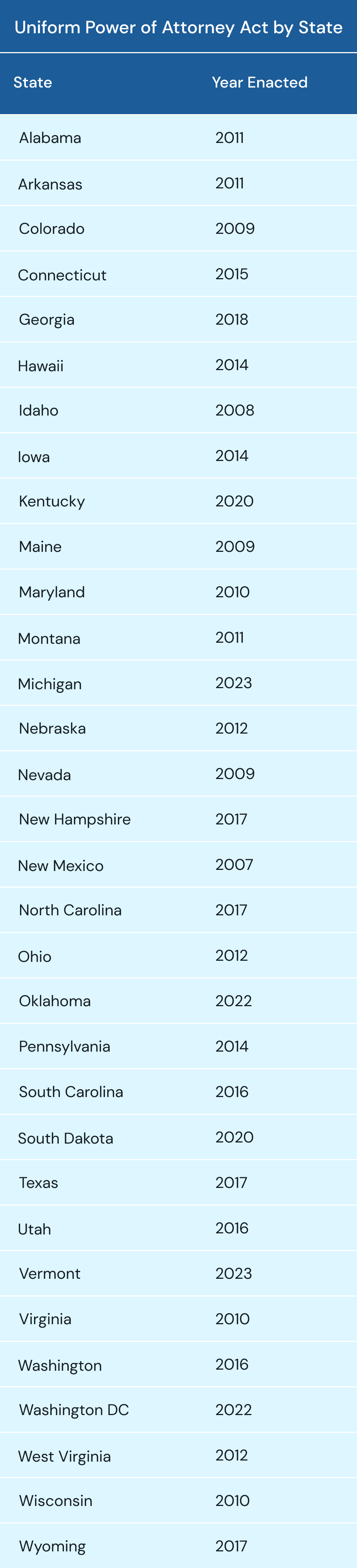
Massachusetts is awaiting final approval for this measure as of 2025. If you move to states that don’t accept the uniform approach, you might need to update your estate planning documents with a new name and address for someone to serve as your attorney-in-fact.
SOURCES
- “Community Property.” Internal Revenue Service, December 2024, https://www.irs.gov/pub/irs-pdf/p555.pdf. Accessed 30 December 2025.
- “Understanding the Uniform Power of Attorney Act (UPOAA).” LawDistrict, 20 August 2024, https://www.lawdistrict.com/articles/uniform-power-of-attorney-act-upoaa. Accessed 23 December 2025.


Bring the power of Silvur to your members