Ready to bring the Silvur experience to your members? Book a personalized demo now!

Lesson 5
State-Specific Costs
4 min lesson
Last Updated: December 27, 2025
In this lesson, we’ll walk you through some of the lower-level costs you might run into if you decide to move to Florida. After all, those sneaky, day-to-day expenses can derail your budget just as quickly as major financial factors.
Transportation
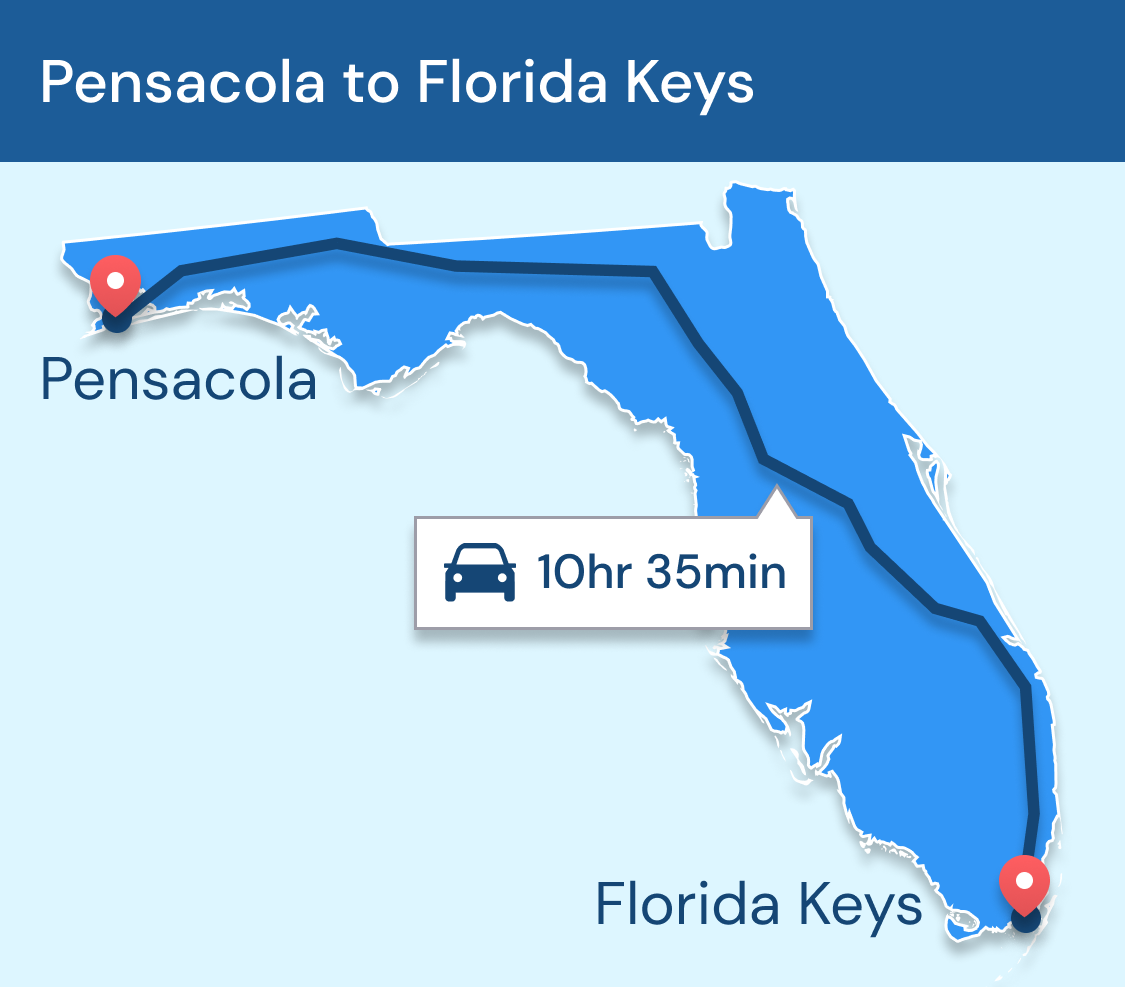
Florida is a long state. It takes more than 10 hours to drive the full length of Florida, from Pensacola to the Florida Keys. Needless to say: you’ll need a car.
As you’re exploring places to live, make sure to include the cost of a vehicle. If you live in a community or a place with a homeowner’s association, there might be a charge for a parking space. Sometimes this fee is one-time; sometimes it’s annually or monthly, depending on where you live.
You’ll also need car insurance. In Florida, car insurance averages $1,878 a year. This is 31.6% higher than the national average.1
If you can’t drive or don’t want to, public transportation exists throughout the state, both through local and multi-county options. For instance, Brightline is a private rail route that runs from Miami to West Palm Beach in South Florida (with an extension currently being built all the way up to Orlando). Central Florida offers the SunRail, South Florida has the Tri-Rail and there are multiple Amtrak stops throughout the state.
Since Florida is below sea level, you won’t find any subways. But many retirement communities offer shuttle services to local shops and stores, depending on where you live.
Air Conditioning
It’s hot in Florida for at least nine or ten months of the year, and it can feel like 100 degrees during the hottest parts of the summer. That means your A/C will be working overtime for many months of the year. Adjust your electric bill accordingly for those summertime heatwaves.
Hurricane Prep
Hurricane season in Florida is six months long. While some years have mild thunderstorms, other years might be more active than others. It’s best to do your prep early and buy supplies, like bottled water, flashlights, batteries, canned goods, and possibly a generator. A generator is hundreds or thousands of dollars but can keep the power on when, in some cases, it could be out for weeks at a time.
Lawn and Pool Care
More than 1 million Florida homes have residential pools that require servicing and cleaning.2 Unless you plan to do the dirty work yourself, you’ll need to hire some outside help for your lawn and pool. Some communities include lawn fees in your home costs, which means you don’t need to worry about getting your own contractor. If you have your own pool, you might want to hire someone. Depending on your pool and needs, you could pay upwards of $200 a month for pool maintenance.3
SOURCES
-
Martin, Ross. “Florida Auto Insurance Rates—What to Know.” The Zebra, 1 December 2025, https://www.thezebra.com/auto-insurance/florida-car-insurance/fl-average-cost-of-auto-insurance. Accessed 27 December 2025.
-
Hall, Kristal and Michael Lo. “Survey of Residential Swimming Pools Assessed by Florida County Property Appraisers, Summer 2006.” Florida State University, October 2006, http://www.consensus.fsu.edu/FBC/Pool-Efficiency/ResidentialSwimmingPoolSurvey.pdf. Accessed 1 December 2024.
-
“Is It Worth Hiring A Pool Company in Florida? A Complete Price Breakdown.” Sublim Pools & Spa, 1 September 2020. https://sublimepools.net/blog/is-it-worth-hiring-a-pool-company-in-florida-a-complete-price-breakdown. Accessed 27 December 2025.
Martin, Ross. “Florida Auto Insurance Rates—What to Know.” The Zebra, 1 December 2025, https://www.thezebra.com/auto-insurance/florida-car-insurance/fl-average-cost-of-auto-insurance. Accessed 27 December 2025.
Hall, Kristal and Michael Lo. “Survey of Residential Swimming Pools Assessed by Florida County Property Appraisers, Summer 2006.” Florida State University, October 2006, http://www.consensus.fsu.edu/FBC/Pool-Efficiency/ResidentialSwimmingPoolSurvey.pdf. Accessed 1 December 2024.
“Is It Worth Hiring A Pool Company in Florida? A Complete Price Breakdown.” Sublim Pools & Spa, 1 September 2020. https://sublimepools.net/blog/is-it-worth-hiring-a-pool-company-in-florida-a-complete-price-breakdown. Accessed 27 December 2025.


Bring the power of Silvur to your members